There are bills that drift through Queen’s Park seemingly divorced from our rural community — technical, bureaucratic bills for “bigger cities” or “other regions.” The newly proposed Water and Wastewater Public Corporations Act is one of those bills. On the surface, it’s about restructuring how some municipalities deliver water services. But beneath the surface, it has real implications for communities like ours.
Right now, with PowerCo’s water needs much higher than originally expected, people in St. Thomas and Central Elgin are asking reasonable questions:
Will my water bill go up? Who decides? Who is responsible for protecting me?
St. Thomas Mayor Joe Preston released an insightful letter about water rates. He explained that municipalities set their own water rates, and that we deliberately structure rates so industrial users pay their fair share while keeping residential costs stable. That’s the system we know — transparent, local, accountable.
But the provincial bill moving through the Legislature could interfere with that balance.
What the Bill Would Change
The Water and Wastewater Public Corporations Act (Schedule 16 of Bill 60) would allow the Minister of Municipal Affairs and Housing to create new arms-length corporations to take over water and wastewater services… without the local consultation and public oversight normally required when municipalities create their own service corporations.
These new corporations could:
- take ownership of municipal water and wastewater assets through provincially directed transfers
- set water and wastewater rates, subject mainly to ministerial review
- issue shares, and the Act leaves it to future regulations to decide who can own them, unlike today’s rules, which require municipal water corporations to be 100% publicly owned
- operate outside the usual definition of a local board, unless regulations say otherwise, which could complicate development charges, financial planning, transparency rules, and long-term capital work
Many of the most consequential parts of this model — who can own shares, how boards are chosen, what safeguards exist on rates — are not defined in the bill at all, but left to future regulations the Minister can change without another vote in the Legislature.
In plain language: the Province could move water services further away from local decision-making, and possibly closer to private investment.
If that happens, the commitment Mayor Preston just made — that residential users will be protected through local rate-setting — becomes harder to guarantee, because decisions wouldn’t be entirely local anymore.
A Pattern We’ve Seen Before
We’ve seen partial privatization in healthcare. People were promised shorter waits and more choice; instead, many feel the system has become more fragmented, more expensive, and harder to navigate.
When services move farther from public control, public accountability weakens — and costs rise.
Water, more than almost anything else, needs to remain firmly accountable to the communities who rely on it every day.
But there’s another important piece to this pattern: it can be interrupted.
This autumn, the Province proposed loosening rent-increase limits within this very same omnibus bill — the Fighting Delays, Building Faster Act. Ontarians made it clear that they didn’t endorse that change. And the government walked those provisions back.
The Province was already willing to amend parts of this bill when the public spoke up. So we know the importance of examining the water sections closely. We need to understand what we’re being asked to accept before it’s finalized, not after.
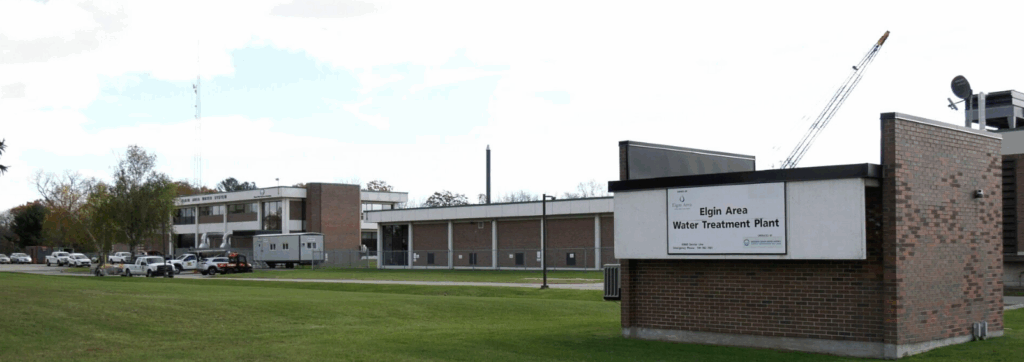
Why This Matters Here
St. Thomas, Central Elgin, and all our Elgin neighbours are facing enormous industrial growth. That growth comes with huge opportunity — and huge water demands.
Residents are already asking excellent questions:
Will PowerCo’s water use cause my bill to rise? Is our system prepared for the scale of new demand? Do we still have a say in how rates are set?
Up until now, municipalities have been able to answer confidently because we still control the rate structure. We can design pricing that protects households while ensuring industry pays appropriately.
If a new provincial corporation gains authority over those decisions, that clarity is gone.
A Call to Act — Before the Costs Arrive
The government has shown that it will walk back proposals when Ontarians speak up. That means our voices matter — but only if we raise them early, before changes are locked in.
This bill doesn’t grab headlines the way rent, healthcare, or housing do. It feels technical. It feels distant. But water touches every home, every business, every family. If accountability shifts, if private interests enter the picture, or if local flexibility disappears, the impacts will be felt right at the kitchen tap.
We are in the rare position of having the Minister of Municipal Affairs and Housing as our MPP, which means our community’s feedback is uniquely amplified.
So as this bill moves forward, let’s read it closely. Ask questions. Push for clarity. Protect what matters.
Because even the bills that sound far away can land close to home — and water is far too important to let it slip through our fingers.
Privatizing our water is one of the worst ideas I’ve ever heard of. This will put profits over safety just like it has before. The system we have now works well and is not in need of restructuring. Water is the most important thing we all need and use and absolutely rely on to be safe. Corporations will not provide this regardless of the promises or systems you have in place after the transfer. DO NOT CHANGE THE SYSTEM THATS IN PLACE!!
If industry wants to come here, they should have to foot the bill for water, hydro and other infrastructure that they need to run their plants. Central Elgin residents already pay the bill for previous poor infrastructure planning by local government so don’t dump this on us as us as well. These new industries need to pay there own bills. No more tax payer handouts.
That’s well put, Deb! I hope you’ll email Minister Flack and share your feedback. It’s important for the Province to hear that residents care about this.
In Central Elgin,we all need to send “our elected provincial decision makers” copies of our water bills for the year
I would wager our bills are nearly as high as our “money spending” premier and his representative Flack.
We already know what happens without proper oversight. Remember the Walkerton Water crisis of the 70’s. with the E-coli outbreak, and where people got very ill. It could all come back to haunt us again. Municipalities need to have oversight of their own water safety, water rights, and rates. Putting it in the hands of provincial government or private enterprise begs for disaster or abuse to the public through neglect or a desire for profit.
Big industry should be responsible for any changes, in the water and electrical systems, that they require to operate. They already get massive government subsidies to attract them to the area.